San Basilio de Palenque: What You Are Paying Five Times More For
Updated September 26, 2026 · 9 min read
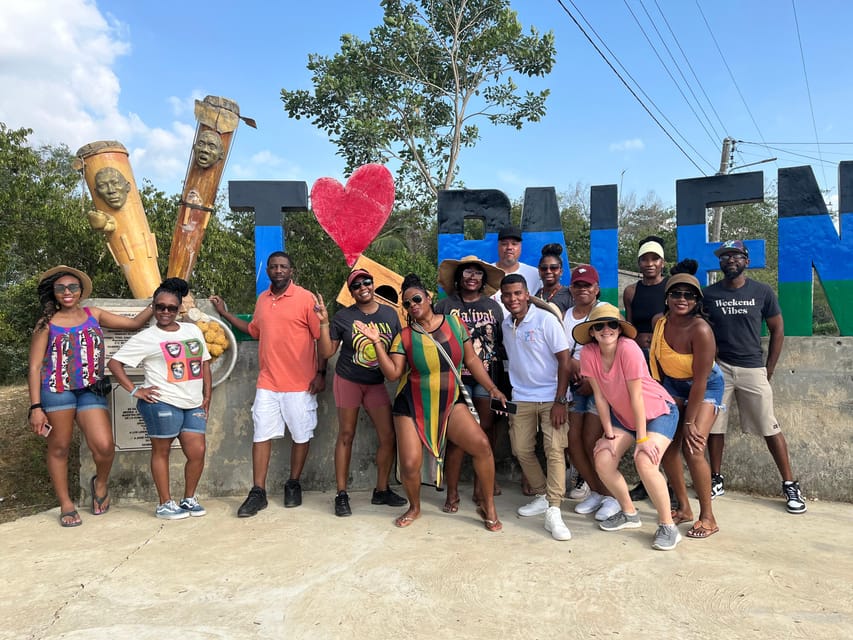
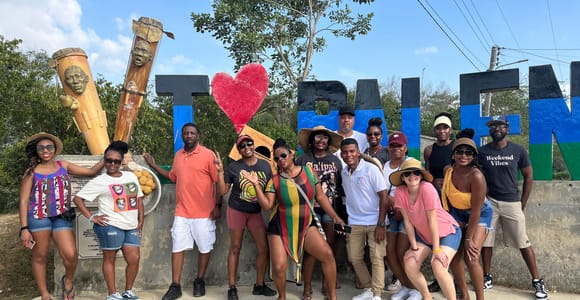
San Basilio de Palenque lies about 50 kilometres from Cartagena and has roughly 3,500 inhabitants. The three offers with a meaningful number of reviews in our listings run from €22.82 to €109.04. That is nearly a factor of five for a visit to the same village — and both ends of the range are well rated.
Before the money, though, it is worth being precise about why anyone goes, because the shorthand used on every booking page is doing a lot of work.
“The first free town in the Americas” — the two dates behind the phrase
The settlement grew in the early seventeenth century from people who had escaped enslavement in Cartagena and fortified themselves in the hills. Their leader, Benkos Biohó, established himself around 1600 at Matuna. The Spanish came to terms with him, then captured him, accused him of plotting against them, and hanged him in 1621.
Freedom came later, twice, and conditionally both times:
- 1691. The Spanish Crown issued a royal decree guaranteeing freedom to the Africans of Palenque de San Basilio — on the condition that they stopped taking in new escapees.
- 1713. After a long stretch of further fighting and resistance, Bishop Antonio María Casiani signed a document granting the community the right to their land, on the same condition.
That is the basis for the phrase. It is not a legend invented for tourism, and it is not quite the clean story either: freedom was granted in exchange for closing the door behind them.
UNESCO proclaimed the cultural space of Palenque de San Basilio a Masterpiece of the Oral and Intangible Heritage of Humanity in 2005 — which is about the language, the funeral rites, the music and the social organisation, not about the buildings. There is no monument here to look at. That matters for what you should expect.
The language is the thing most visitors miss
Palenquero is thought to be the only Spanish-based creole language spoken in South America. It is not a dialect and not an accent; it carries African grammar under a largely Spanish vocabulary, and it survived because the village was isolated for centuries.
It is also receding. As of 2007, fewer than half of the community’s roughly 3,000 residents still spoke it. Much of what the schools and cultural organisations in the village now do is aimed at that decline. A visit that includes a session on the language is not a folklore add-on; it is the point.
One more recent change worth knowing
In July 2024, President Gustavo Petro signed Law 2379 of 2024, making San Basilio de Palenque Colombia’s 1,104th municipality — separating it administratively from Mahates, the municipality it had belonged to as a corregimiento. The law calls on the departmental assembly of Bolívar to get the process of creating the municipality under way; it did not complete it.
You will still find reference works and maps listing it under Mahates. Both are, in a sense, current: the decision is made, the paperwork trails it. If a guide tells you the village recently became a municipality in its own right, that is what they mean.
What the price difference actually buys
| Trip | Price | Rating | Reviews |
|---|---|---|---|
| San Basilio de Palenque tour | €22.82 | 4.5 | 53 |
| Palenque Tour and Road to Emancipation | €104.95 | 4.6 | 110 |
| Palenque: History and Tradition | €109.04 | 4.8 | 306 |
Of those three, the most expensive is also the best rated and by far the most reviewed, which is unusual — on the island trips and at Playa Blanca the cheap end is where the complaints pile up, but here the €22.82 option holds 4.5 stars.
What the top end lists as included: hotel pickup and drop-off, an air-conditioned vehicle, landing and facility fees, bottled water, a typical lunch, a rum tasting, a dance show and a professional local guide from Palenque. Its itinerary names the casa del instrumento, the drum-maker’s house, and the monument to Kid Pambele.
So the honest breakdown of the extra eighty-odd euros is: the vehicle and the air conditioning for a good hour each way, the meal, the performances, and — the part worth paying for — a guide who is from the village rather than from Cartagena.
At the low end you are buying transport and access. That is a perfectly reasonable thing to buy if you would rather spend the day looking around than being shown around. Read what the specific listing includes before you decide which one you are getting.
Kid Pambele, and why there is a statue
Antonio Cervantes, “Kid Pambelé”, was born in San Basilio de Palenque on 23 December 1945. On 28 October 1972 in Panama City he beat Alfonso “Peppermint” Frazer by knockout in the tenth round to take the WBA light welterweight title — the first world boxing title ever won by a Colombian. He held it twice across the seventies.
His fame brought public works to the village, and the statue stands at the entrance to the gym that carries his name, where young boxers still train. Several itineraries stop there. It is not a detour for sports fans; in a village with no colonial architecture to photograph, he is one of the few things that is physically there.
Going on your own
There is a public route, and it is not difficult:
- From Cartagena’s Terminal de Transportes, take a bus towards Mahates or San Juan Nepomuceno.
- Tell the driver you are getting off at the “Entrada a Palenque” — the turn-off, roughly three kilometres short of the village. The ride is about an hour.
- From the junction, a moto-taxi takes you to the village square.
Two practical warnings. Bring cash: card payment is not reliably available in the village. And this is a living community, not an open-air museum — people’s houses are not exhibits, and photographing anyone without asking is exactly as rude here as it would be at home. The organised visits pay local guides, which is a large part of why they are welcome.
If you would rather not hang your day on a junction and a moto-taxi — or you want to combine Palenque with somewhere else inland and come back on your own schedule — a hire car is the straightforward alternative: compare cars for Cartagena and check the excess, the deposit and the fuel policy with the supplier before you book, since those vary far more between suppliers in Colombia than the headline daily rate does.
When not to go
Not on a day when you are also trying to do something else. It is a good hour of driving each way, plus the hotel pickup round and the time in the village — the trips that quote seven hours are quoting honestly.
And not if what you want is a photogenic colonial village. Palenque is dusty, low-built and ordinary-looking. What is remarkable about it is entirely audible and entirely social — the language, the drums, the medicine, the funeral rites — and that only opens up if someone is explaining it to you. For a day that looks like the postcards, the walled city on foot is the other thing to book, and it is a completely different kind of afternoon.