Playa Blanca on Barú: Why the Cheap Day Trips Rate Worst
Updated September 26, 2026 · 8 min read
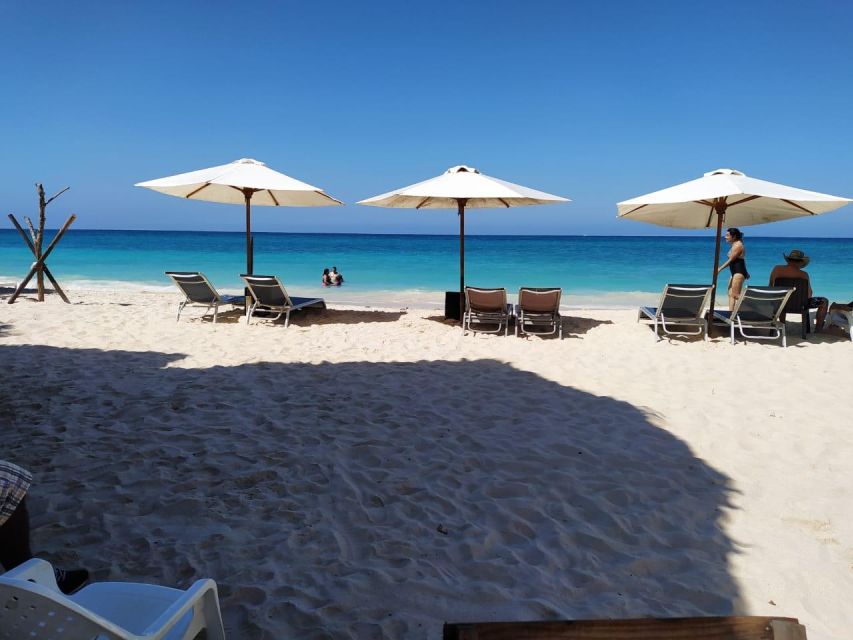
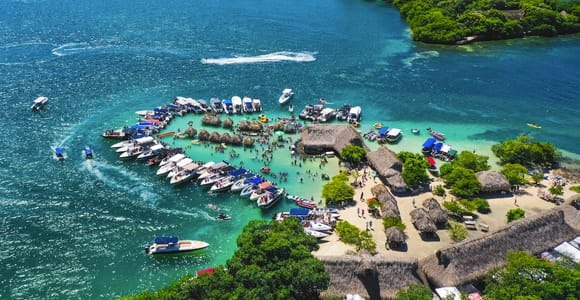
Playa Blanca is the beach in every photograph of Cartagena that does not show a city wall: white sand, flat turquoise water, an hour or so from the old town on the island of Barú. It is genuinely beautiful. It is also the single most complained-about day out in the city, and our own listings show exactly where the complaints sit.
The ratings fall into two groups, and price sorts them
These are Playa Blanca day trips from our Cartagena island listings, which start at €12.32:
| Trip | Price | Rating | Reviews |
|---|---|---|---|
| Snorkel, mangroves and Playa Blanca | €43 | 3.1 | 138 |
| Barú Island, Playa Blanca with lunch | €26 | 3.5 | 596 |
| Barú and Playa Tranquila day trip | €26 | 3.5 | 79 |
| Barú Island Playa Blanca with lunch | €28 | 3.7 | 102 |
| Isla Barú beach club at Playa Blanca | €35 | 3.8 | 135 |
| Playa Blanca full-day trip | €68 | 4.5 | 51 |
| Rosario Islands with snorkelling and Playa Blanca | €61 | 4.8 | 1,318 |
All five budget trips in that table sit between 3.1 and 3.8. Both offers above €60 sit at 4.5 and 4.8 — and the 4.8 has more reviews than all five budget ones combined. Seven offers, one pattern. That is not a run of bad luck with individual guides.
There is an exception in the same listings, and it belongs here: a beach club day on Barú costs €26.34 and holds 4.1 — but on 46 reviews, a fraction of what the numbers above rest on. The pattern is clear; a rule it is not.
The reason is structural. A €26 trip gets you to the sand and no further. Everything you then want — a chair, shade, lunch you would choose yourself, a drink — is bought on the beach from whoever is standing nearest. The dearer trips either include those things or take you somewhere they are already arranged. The beach is identical. The day is not.
What you actually pay once you are there
This is the part that has no fixed price, and the honest version is that nobody can quote you one. Even a Cartagena operator selling Playa Blanca day passes states in writing that it does not publish a rate for beach rentals, because they are negotiated locally on the day.
Budget for all of these separately:
- A sun lounger, a parasol, a tent or a hammock. Negotiated, per item, and the price moves with the hour and the crowd.
- Lunch and drinks, if your trip does not include them, or if it includes a set plate and you want something else.
- The offers that start free. The pattern reported consistently in the Colombian press, in consolidated review sites and in independent guides is the same one: an oyster or two “on the house”, a massage begun without an agreed price, a photo with an animal — each ending in a charge that was never quoted. Commercial pressure is heaviest in the central stretch of beach and at peak hours.
None of this is unique to Barú and none of it is dangerous. It is simply a sales environment, and the way through it is boring: agree the price before anything is handed to you, put on your skin or placed in your hands, and say no once clearly rather than five times politely.
The fee that depends on how you travel
Here is a distinction that appears on almost no booking page, and it is worth real money.
By boat, you leave from Muelle de la Bodeguita and pay the pier and park charge in cash before boarding — roughly forty thousand pesos per person, as covered in our comparison of the island boats.
By road, you never use the pier, so there is no pier charge. What remains is the compulsory insurance the operators simply call seguro obligatorio, and that applies either way: a Cartagena operator selling the bus day trip to Playa Blanca lists it explicitly among the things not included — COP 8,800 per person, separate from the fare. A second operator quotes the same amount and describes it as insurance for entry to the national parks. Both said so in September 2026.
So the land route is not merely cheaper transport — it removes a charge entirely. It costs you little extra time: the bus operators collect from hotels from seven in the morning and allow about an hour for the run via Pasacaballos, much the same as the crossing. What you give up is the boat ride itself.
Barú is an island you can drive onto
Barú is separated from the mainland by a canal rather than open sea, and there is a road route via Pasacaballos. That has two consequences most visitors never hear.
The first is the bus option above. The second is that Playa Blanca can be reached independently, without a tour at all: a local bus towards Pasacaballos and then onward local transport. Travellers who do this pay a fraction of any organised price. They also arrive without a chair, without lunch, without a return time and without anyone to complain to, which is exactly the trade.
If that sounds appealing, do it as a second beach day rather than a first. The first one is not the day to learn the geography.
Playa Blanca or Playa Tranquila
Several trips now offer Playa Tranquila instead, further along the same island, usually with a short boat transfer tacked on at the end. There is no reliable premium for it: in our own listings the Playa Tranquila day costs €26, exactly the same as the Playa Blanca one, and rates the same 3.5 — both rows are in the table above.
What Playa Tranquila sells is fewer people and fewer vendors. Whether that is worth anything to you depends on one question: are you going for the water or for the postcard? Playa Blanca is the postcard, and the postcard is crowded by eleven in the morning.
Two things that decide the day
Go early or combine it. The beach empties dramatically once the day-trip boats leave in the afternoon, and it is close to unrecognisable at eight in the morning. The way to see it with the strongest rating-plus-volume combination in our listings is not a Playa Blanca trip at all — it is the Rosario Islands excursion that stops there at €61 and 4.8 stars, which arrives after the snorkelling and gives you the beach with a purpose instead of seven hours to fill.
January to March, check the water before you commit. These are the driest months and the ones with the northeast trade winds. Playa Blanca faces open Caribbean, and on a windy February day the flat turquoise water in every photograph is neither flat nor turquoise. The walled city on foot is the better use of that particular morning, and it is not a consolation prize.